
Welcome home, little one!
Puppy Training in Virginia Beach, VA
Your new puppy is learning every day, whether you teach them or not. Our puppy training in Virginia Beach turns those first months into good habits: crate and potty training, leash manners, puppy obedience, and calm socialization. We work with families across Virginia Beach, Chesapeake, Kempsville, and greater Hampton Roads through puppy classes, private lessons, day training, and puppy board and train. Training is led by Josh Avila, a former Virginia Beach Sheriff’s Department K9 handler. Call today and we will build a plan around your puppy’s age, breed, and energy.

future good pup
8 weeks
Puppies can start
2 to 4 weeks
Puppy board and train
Discount
Military and public service
The earlier, the easier
When to Start Puppy Training
Training can start as early as 8 weeks old. The sooner your puppy learns clear rules, the fewer bad habits you have to undo later. Puppy group classes usually begin once vaccinations are underway and your vet gives the okay. Until then, private lessons and day training at our facility let your puppy learn in a clean, controlled space.
Not sure where your puppy fits? Read our guide to the best age to start puppy training, or tell us their age, breed, and what is happening at home, and we will point you to the right starting point.
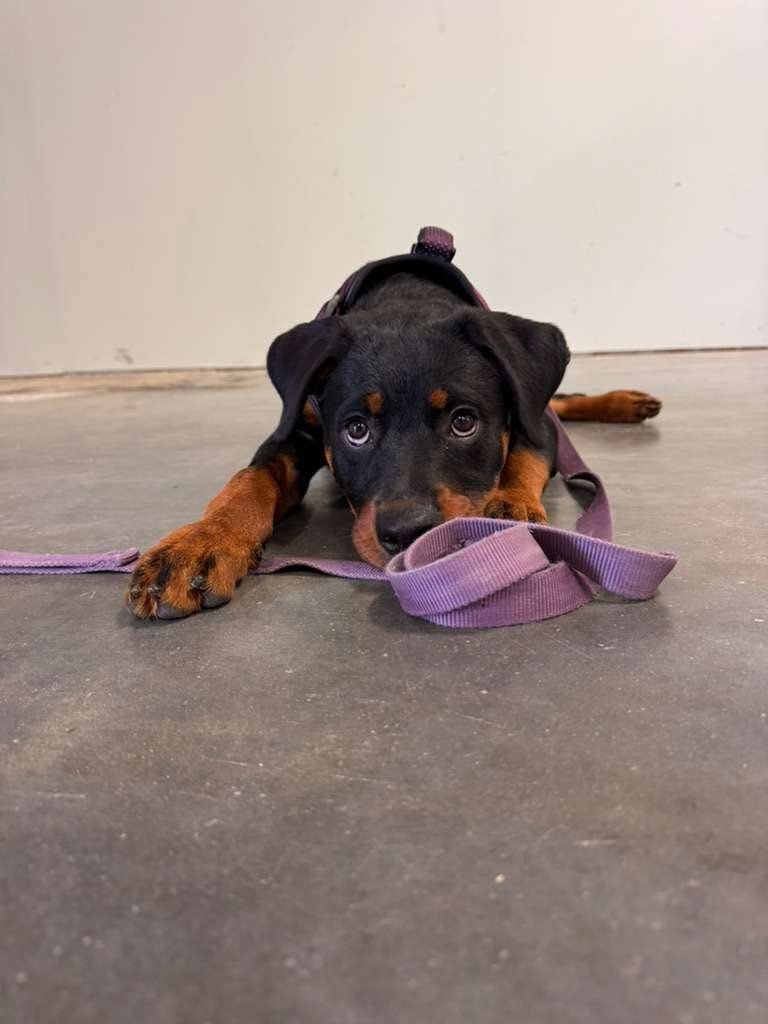
Starts at 8 weeks
Private lessons and day training
Stage 1
8 to 10 weeks
Name, crate routine, potty schedule, and gentle handling.
Stage 2
10 to 16 weeks
Sit, down, place, first leash walks, and new sounds and surfaces.
Stage 3
4 to 5 months
Come when called, leave it, and loose leash walking around distractions.
Stage 4
6 months and up
The teenage phase. We tighten listening skills and impulse control.

Quieter nights start here
Fewer accidents, quieter nights
Crate and Potty Training Help
Accidents on the rug, crying in the crate at 2 a.m., and chewing on everything in reach are the top reasons new puppy owners call us. We give you a simple daily schedule, show you how to make the crate a calm place, and coach the whole household so everyone follows the same rules.
Crate and potty help is part of our puppy programs, so you leave each session knowing exactly what to do at home. The goal is a puppy who sees the crate as a safe spot and a household that knows what to do after meals, naps, and play.
A feeding and potty schedule built around your puppy's age
Young puppies need to go out often: right after waking up, after meals and water, after play, and before bed. A common rule of thumb is that a puppy can hold it about one hour per month of age, plus one, so a 3 month old needs a break every few hours. We build a written schedule around your puppy’s age and your work hours, and we adjust it as your puppy grows.
A crate setup that stops whining at night
Pick a crate just big enough for your puppy to stand, turn and lie down, and set it near where the family sleeps at first. Feed meals and give chews in the crate so it means good things. We show you how to build up crate time in small steps, and how to tell a puppy who needs to go out from one who is testing whether whining works.
How to handle accidents without scaring your puppy
Accidents happen. If you catch your puppy mid-accident, calmly interrupt and take them straight outside, then reward when they finish there. If you find the mess later, just clean it, since scolding after the fact only teaches a puppy to hide. An enzyme cleaner removes the smell that draws puppies back to the same spot, and a tighter schedule usually fixes the rest.
Redirecting nipping and chewing before it becomes a habit
Nipping and chewing are normal for a teething puppy, so the goal is to redirect, not punish. Keep chew toys handy, swap your hand or shoe for a toy the moment teeth come out, and end play calmly when nipping gets too rough. We also teach the family to manage the space, so there is less to chew on while good habits form.
safe exposure
Puppy Socialization in Virginia Beach
Socialization is not about meeting every dog in town. It is calm, positive exposure to the people, sounds and surfaces your puppy will live with, at a pace your puppy can handle. Ask your vet when your puppy’s vaccines allow time around other dogs, and start with low-risk places first.
At home first
Doorbells, the vacuum, kids playing, slick floors, stairs and car rides. Short, happy sessions build confidence before your puppy ever leaves the house.
Quiet public places
Leashed walks on quiet sidewalks and city paths, where your puppy can watch people and traffic from a comfortable distance. Virginia Beach requires a leash in city parks and on sidewalks.
The Oceanfront Boardwalk
Bikes, crowds, gulls and street noise make it a big test, so work up to it. In summer, dogs may use the Boardwalk on a leash from 6 a.m. to 7 p.m. and are not allowed on the Resort Area sand. See the city’s beach rules.
Puppy class and dog parks
A structured class lets your puppy meet other puppies safely. City dog parks do not allow puppies under 4 months and require a license and rabies vaccine, so classes come first.
Good manners, everywhere you go
Puppy Obedience Training That Holds Up in Real Life
Good manners in the living room are only half the job. Dogs live in the real world, so we practice where your puppy will actually be: our training facility on Horse Pasture Road, busy sidewalks, parks, and the Oceanfront boardwalk.
Every skill is taught in small steps with your puppy’s age in mind, then practiced around real distractions so it holds up at the vet, on walks, and when guests come over.
Name and focus
Sit and down
Place
Come when called
Leave it
Loose leash walking
Calm greetings
Handling for vet and grooming visits
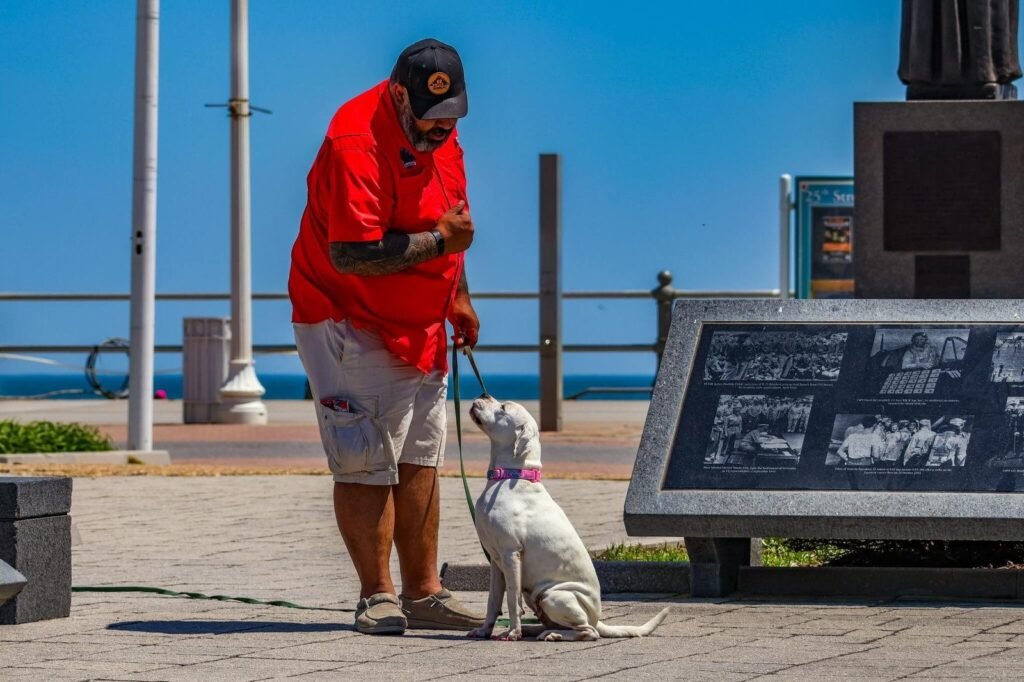
skill by skill
How We Teach Each Puppy Obedience Skill
Every skill starts at home in short, easy reps and then moves to busier places. The ages below match the stages above, and every puppy moves at its own pace.
Name and focus
From 8 weeks. Say the name once, reward the moment your puppy looks at you, and repeat in short sessions until the head turns every time.
Sit and down
From about 10 weeks. Lure the position with a treat, reward, then fade the lure so a word or hand signal is enough.
Place
From about 10 weeks. Your puppy learns to go to a bed or raised cot and stay there, which helps at the door and at dinner time.
Come when called
Starts indoors at 10 to 16 weeks, then moves outside on a long line around distractions from about 4 months. Coming to you always pays.
Leave it
From about 4 months. Your puppy learns that ignoring a dropped item or a tempting smell earns something better from you.
Loose leash walking
First leash walks at 10 to 16 weeks, then real distractions from about 4 months. Pulling stops paying, and walking near you does.
Calm greetings
Practiced from the start: four paws on the floor gets attention, jumping does not. Guests help us practice at the door.
Handling for vet and grooming
From 8 weeks. Gentle, rewarded handling of paws, ears and mouth so vet and grooming visits stay calm.
Pick what fits your family
Puppy Classes and Programs
Every puppy is different, so we match the program to your puppy and your schedule. Every program teaches you right alongside your puppy.
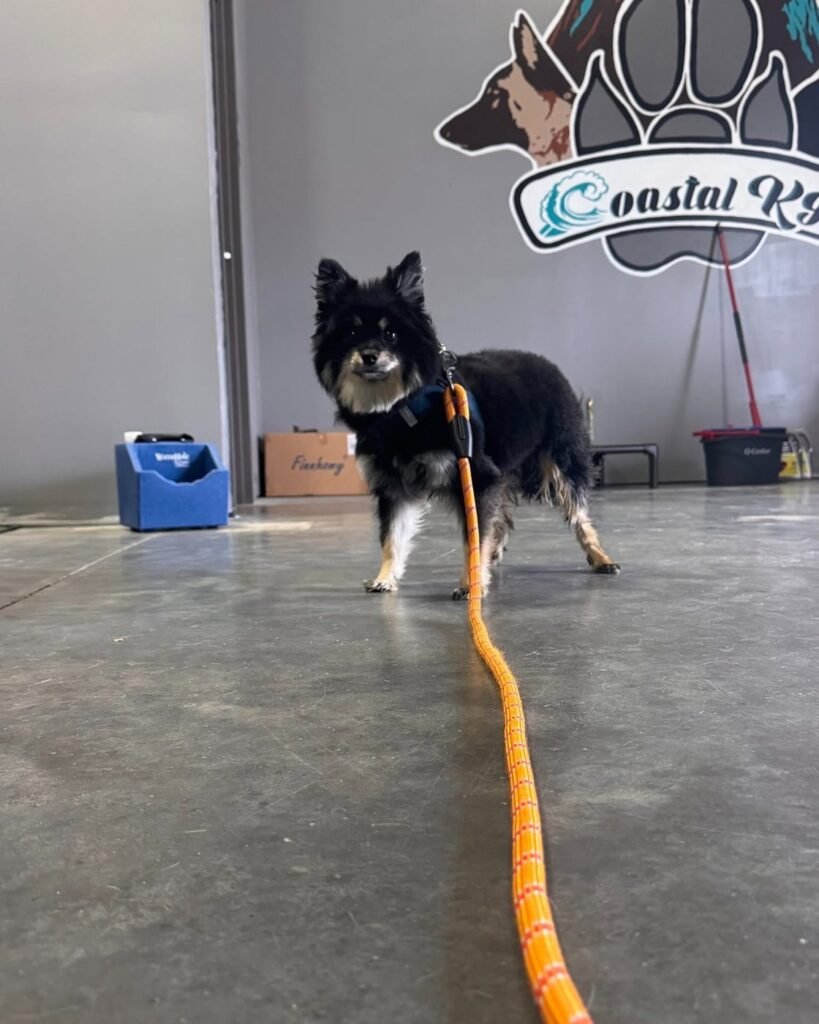
Puppy Group Classes
Socialization, basic cues, and confidence around other puppies and people in a structured class. Best for puppies whose vaccinations are underway and whose vet has given the okay. Your puppy comes home with better focus around distractions.
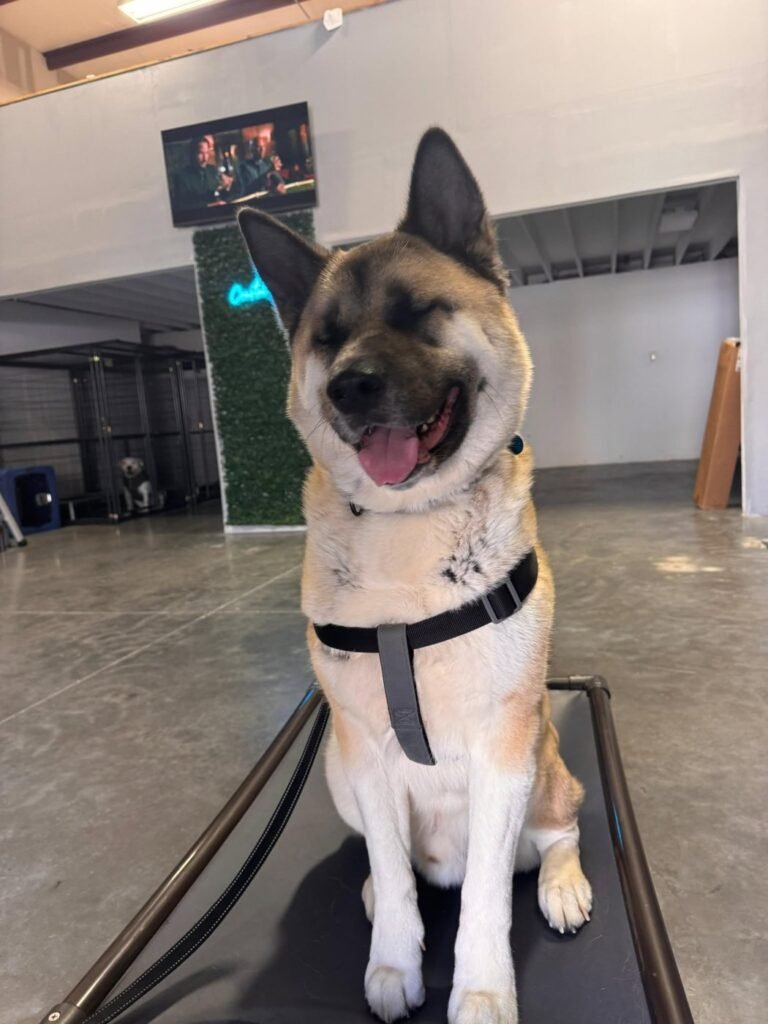
Private Puppy Lessons
One-on-one sessions from 8 weeks old, focused on your puppy’s habits and your home routine. Best for families who want a plan built around their own house, including lessons in your home. You leave each session with clear homework.
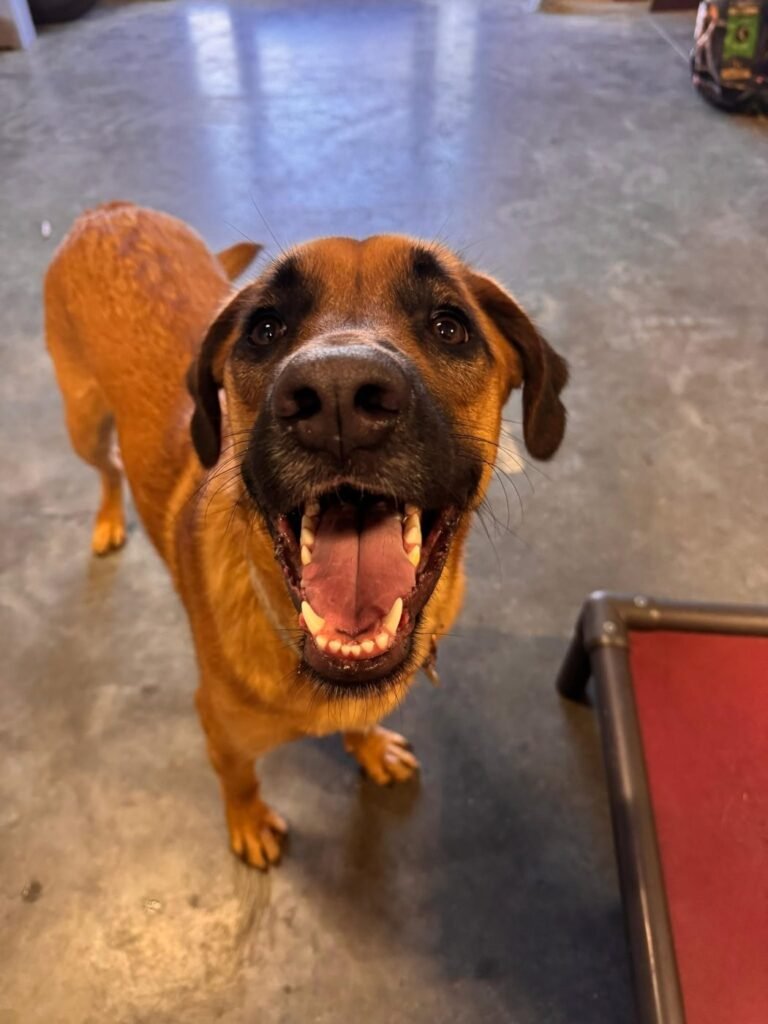
Puppy Day Training
Drop your puppy off for structured training during the day and pick them up in the evening. Best for busy families. Your puppy practices with Josh all day, and you get a quick handoff on what to repeat at home.

Puppy Board and Train
Two to four weeks of full-time training at our Virginia Beach facility, then we teach you how to keep it going at home. Best for families who want the fastest foundation. Your puppy comes home with daily structure and the basics practiced many times a day.
side by side
Compare Puppy Training Programs
Not sure which program fits? Here is how they compare. Every program teaches you right alongside your puppy.
| Program | Starting age | Your time | Best fit |
|---|---|---|---|
| Puppy group classes | Once vaccinations are underway and your vet approves | You attend each class with your puppy | Socialization and focus around other puppies |
| Private lessons | 8 weeks | Sessions scheduled with Josh, plus homework | Problems specific to your home and routine |
| Day training | 8 weeks | Morning drop-off and evening pickup | Busy families who want daily practice |
| Board and train | 8 weeks | 2 to 4 weeks at our facility, then a handoff lesson | The fastest, most complete foundation |
Happy puppies, happy owners
Puppy Parents Love Coastal K9 Academy
★★★★★
“We contacted Coastal K9 when we realized we could not control our new Jack Russell puppy. We chose the 8 week day program and took Jack to see Josh a day a week for 8 weeks. We could tell a change in Jack right away.”
Karen V.
★★★★★
“Josh brought my puppy back well-behaved and eager to please. In such a short time period I have seen a total transformation of my puppy!”
Latesha S.
★★★★★
“We’ve had Josh train our dog for 5 weeks total, both as a puppy for self confidence training and an adult for obedience training. World of difference it has made.”
Michael M.

Josh, owner and lead trainer
Meet your trainer
Why Virginia Beach Families Choose Coastal K9 Academy
Josh Avila spent years as a Virginia Beach Sheriff’s Department K9 handler before founding Coastal K9 Academy. That background shows up in how we train puppies: clear expectations, honest feedback, and a plan tailored to your dog, not a one-size-fits-all program.
Puppies learn fastest when the whole family is on the same page, so we coach you as much as we train your puppy. You will know what to practice at home and why it works.
Former Sheriff's Department K9 handler
Licensed, bonded, and insured
Military and public service discount
Financing available through All Pet
Ask us anything
Puppy Training Questions
New puppy, lots of questions. Here are the ones we hear most. Still wondering? Give us a call.
What age should I start puppy training?
As early as 8 weeks. Private lessons and day training can start right away, and group classes usually start once vaccinations are underway and your vet approves.
Is puppy board and train safe?
Yes. Programs run two to four weeks at our facility with age-appropriate structure, plenty of rest, and confidence building.
Do you help with crate and potty training?
Yes. We cover crate and potty routines in our puppy programs and give you a schedule to follow at home.
How much does puppy training cost?
Every plan is built around your puppy, so the price depends on the program. Call us and we will recommend the right fit. Financing and a military discount are available.
How long does puppy training take?
It depends on the program and your puppy. Board and train runs 2 to 4 weeks, day training is a same-day drop-off and pickup, and private lessons and classes build skills over a series of sessions. Puppies keep learning for months, so we give you a plan to keep practicing at home.
Do owners attend the training?
Yes. Every program teaches you right alongside your puppy. Even with board and train, we finish with a handoff lesson so you know exactly how to keep the new habits going.
What happens after the program ends?
You go home with clear homework and a routine to follow. If something slips as your puppy grows into the teenage phase, a private lesson is an easy way to tighten things up again.
Do you train puppies in the home?
Yes. Private lessons can be held in your home, which is ideal for crate, potty and door manners. See our in-home dog training page for details.
Let’s do this together
Start Your Puppy Off Right
Tell us your puppy’s age and what is driving you crazy. We will recommend the program that fits. Serving Virginia Beach, Chesapeake, Kempsville, and across Hampton Roads.