Why Your Dog Barks and Lunges at Other Dogs on Walks
If every walk feels like a gamble, you are not alone. Leash reactivity is one of the most common things I am asked to help with in Virginia Beach, and it is more fixable than most owners think. This guide explains what is going on, what does not help, what real training looks like, and when to call in a professional.
What Leash Reactivity Is
A leash reactive dog reacts strongly to a trigger, most often other dogs, while on a leash. The reaction can be barking, lunging, spinning, whining or growling. The same dog may greet other dogs calmly off leash, which is part of why owners find it so confusing.
It is not automatically aggression. Reactivity usually comes from frustration (the dog wants to say hello and the leash says no), fear (the dog wants distance and cannot leave) or over-arousal (the dog is simply too excited to think). Aggression is a separate question that needs an in-person evaluation, and I will tell you straight if your dog’s case needs a veterinarian or a veterinary behaviorist first.
This is also a different problem from pulling. A dog that pulls wants to get somewhere. A reactive dog is reacting to something. If you are not sure which you have, our guide to how to stop leash pulling explains the difference.
Why Dogs Explode on Walks
In my experience, a few things combine to make a dog reactive on leash.
The leash removes choices. A dog that would normally curve away, sniff or play cannot. The tension in the leash also changes his body, and he can feel you tighten up too.
He practices it. Every explosion that works, because the other dog moves away or you cross the street, teaches the dog that exploding gets results. Practice makes it stronger.
He is over his threshold. Every dog has a distance at which he can still notice a trigger and stay in control. Past it, thinking stops and the reaction takes over.
Past experiences and genetics matter. A scary encounter, too little early socialization or a breed built to guard or herd can all play a part. We often see a mix.
Why Punishment and Avoiding Walks Both Fail
Two common reactions to a reactive dog are to correct the outburst hard or to stop walking him. Neither fixes the cause.
Punishing the outburst can quiet the noise while leaving the feeling underneath untouched. A dog that is afraid and gets corrected near other dogs can learn that other dogs predict bad things, which can make the next reaction worse.
Avoiding walks keeps the dog calm in the short term, but it leaves him bored and under-exercised, and it does not teach him anything. The first time he meets a dog again, the reaction is just as strong.
What works is changing how the dog feels about the trigger and teaching a better habit, in small steps, at a distance he can handle.
What Threshold Work Looks Like
Every reactive dog is different, so I do not promise a script, but the shape of the work is consistent. Here is what we do in private lessons.
1 | Find the working distanceWe spot the distance at which your dog notices another dog but can still look at you and take a treat. That is where training starts, not where the problem ends. |
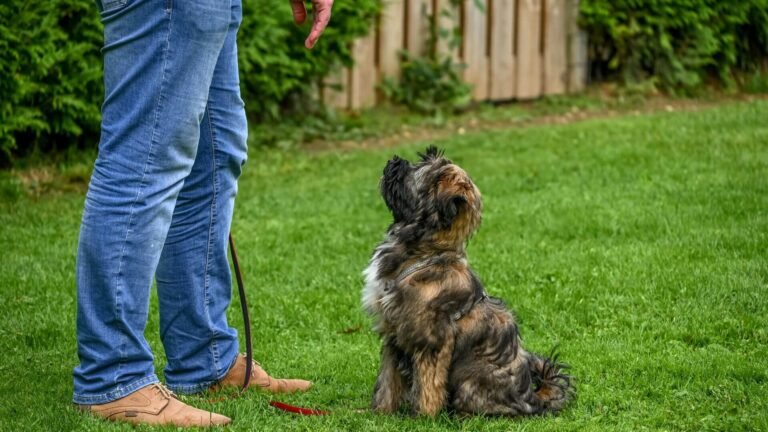
2 | Build a better habit than lungingWe teach a clear alternative, such as turning to look at you or moving calmly beside you, and pay for it generously. The new habit has to be easier and more rewarding than exploding. |
3 | Close the gap slowlyOnly when the dog is relaxed at one distance do we move a little closer. If he cannot handle it, we back up. Rushing this step is the most common reason home practice stalls. |
4 | Add real-world walks and handler skillsWe practice on actual walks, with you handling the leash calmly, using space, turns and timing. The goal is a dog that can pass another dog and keep walking. |
Leash reactivity training usually takes longer than fixing plain pulling, and how long it takes depends entirely on the dog. I would rather tell you that up front than promise a fast result.
Holiday Visitors and Crowded Winter Routes
Late November through January makes reactive dogs harder to manage in Virginia Beach. Guests arrive, houses are busier and walking routes fill up with visitors and their dogs. Here is how to protect your progress.
Pick quieter times and places. Early morning or late evening routes with wide sidewalks give you room to keep your distance.
Give yourself space. Crossing the street, turning around or stepping between parked cars is not failing, it is good handling.
Plan for visitors at home. If the dog reacts to people or dogs at the door, set up a separate space with a chew or food puzzle before guests arrive.
Skip busy dog areas for now. Dog parks and crowded boardwalk times are the wrong place to practice while your dog is still working through reactivity.
When to Call a Pro or a Vet
Call a professional if your dog’s reaction is intense, if he has bitten or tried to, if walks are unsafe for you or if home practice has stalled. If you think pain, illness or a sudden change in behavior is involved, your veterinarian should come first, and a veterinary behaviorist may be part of the plan.
For most reactive dogs we see, private lessons are the best starting point because the work is one-on-one at the dog’s pace, and it is where our behavior-focused sessions happen. For households that want more daily repetition, ask about our board and train programs, which include behavior modification for reactivity, anxiety and impulse control, with owner sessions so the skills carry over at home.
Live outside Virginia Beach? See our pages for a dog trainer in Norfolk, VA and dog training in Chesapeake, including drive times to our facility.
Common Questions About Leash Reactivity
Is leash reactivity the same as aggression?
Why is my dog fine off leash but reactive on leash?
Will my reactive dog ever be able to walk past other dogs?
Should I let my reactive dog meet other dogs to socialize?
Do I need a trainer, or can I fix this at home?
Ready for Calmer Walks?
Tell us what happens when your dog sees another dog, and we will tell you honestly what it will take, with training tailored to your dog, not a one-size-fits-all program.