Why Your Dog Pulls on the Leash, and How to Stop It for Good
Leash pulling is one of the most common problems we see in Virginia Beach, and one of the most fixable. The dog is not being stubborn. Pulling simply works, right up until someone teaches the dog that it does not. This guide covers why dogs pull, what you can start doing on tonight’s walk, and what a balanced trainer does differently when home practice has stalled.
Why Dogs Pull in the First Place
Start with the uncomfortable truth: if your dog pulls on the leash, it is because pulling has been working. The American Kennel Club’s trainer puts it simply. Dogs pull because they want to get moving, dogs repeat behaviors that are rewarding, and if you let them walk while they are pulling, you are giving them the very reward they seek (AKC, How to Stop Your Dog From Pulling on the Leash). Every step forward on a tight leash is a paycheck.
We see the same thing in our lessons. There are many reasons a dog may pull, but the most common cause is a lack of proper training, and some breeds built for sled, working or tracking jobs were literally bred to pull. That is good news: a trained behavior can be retrained, and a bred-in drive can be given a rule to live inside.
What to Do on Tonight’s Walk
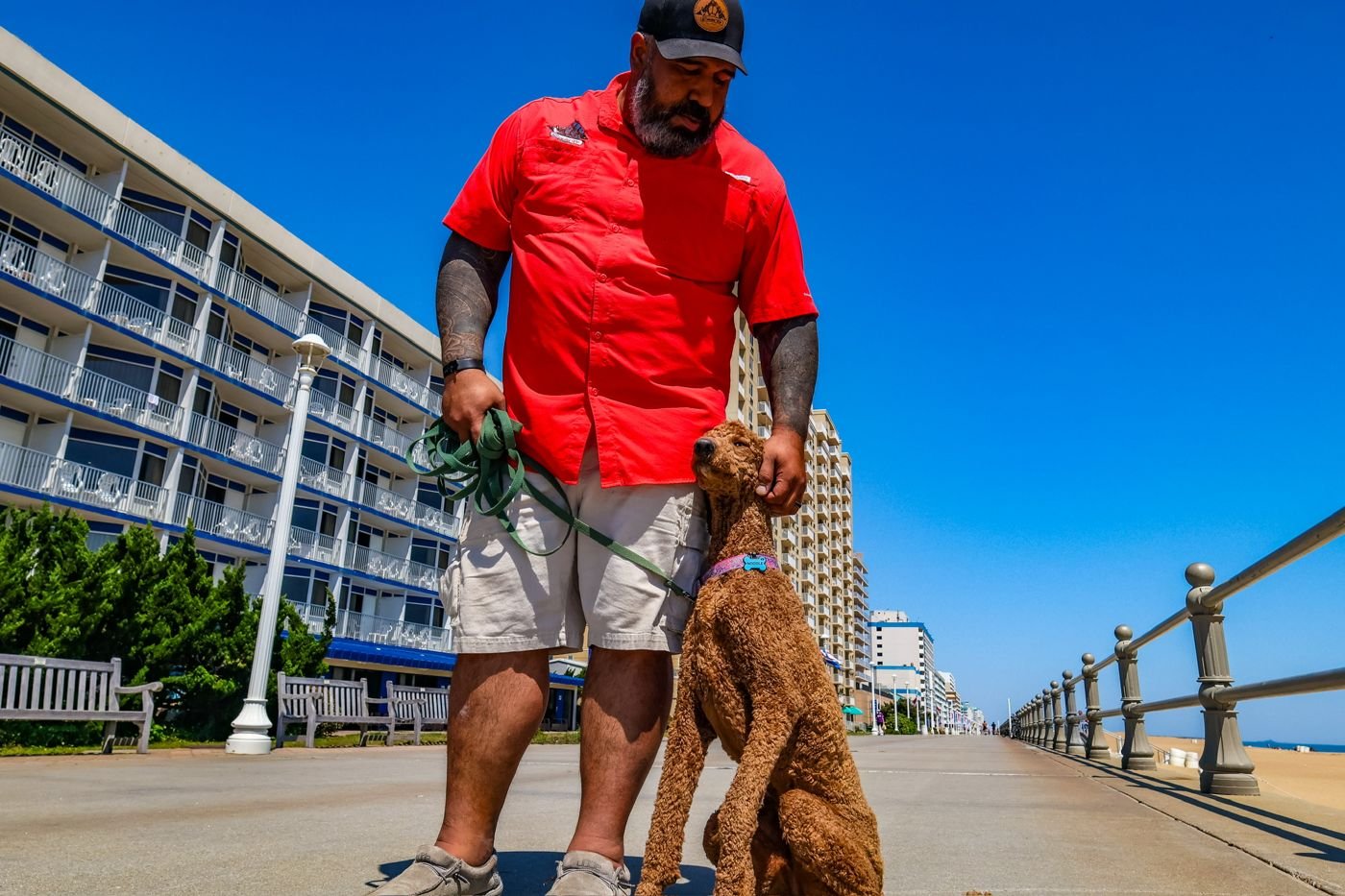
1 | Stop the second the leash goes tightStop, plant your feet, and wait for the dog to come back or loosen the tension. Trainers call it being a tree: become an immovable object. No yanking, no talking, no forward progress. Pulling now earns nothing. |
2 | Wait for a J-shaped leash and a glance backYou are looking for slack hanging in a J shape and the dog’s attention returning to you. That moment is the behavior you want. Mark it with a calm “yes” and then move again. The walk resuming is the reward. |
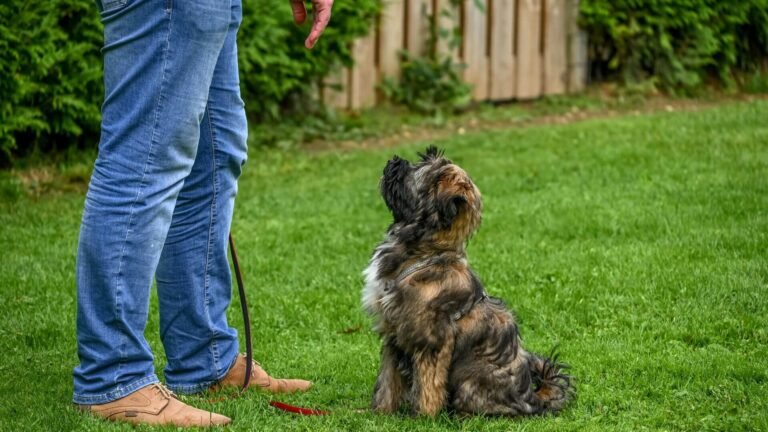
3 | Pay for position, two steps at a timeStart in a quiet area: when the dog walks beside you for two steps, reward, then gradually increase the distance and the distractions. Catch the dog doing it right. Food, praise, or the chance to go sniff something all count as pay. |
4 | Turn and go the other wayWhen the dog surges ahead, turn and walk the other way, then reward as soon as you feel slack. The first walks may cover only a few feet, and that is normal. Any leash pull on your end should be just enough to get the dog’s attention, never force. |
5 | Keep the rule on every walkThe no-pulling rule has to hold regardless of the situation, because any walk where pulling works again sets the training back. A quicker pace helps, so walk a little faster than feels natural, and practice after the dog has burned some energy, not instead of exercise. |
Equipment: What Helps and What Does Not
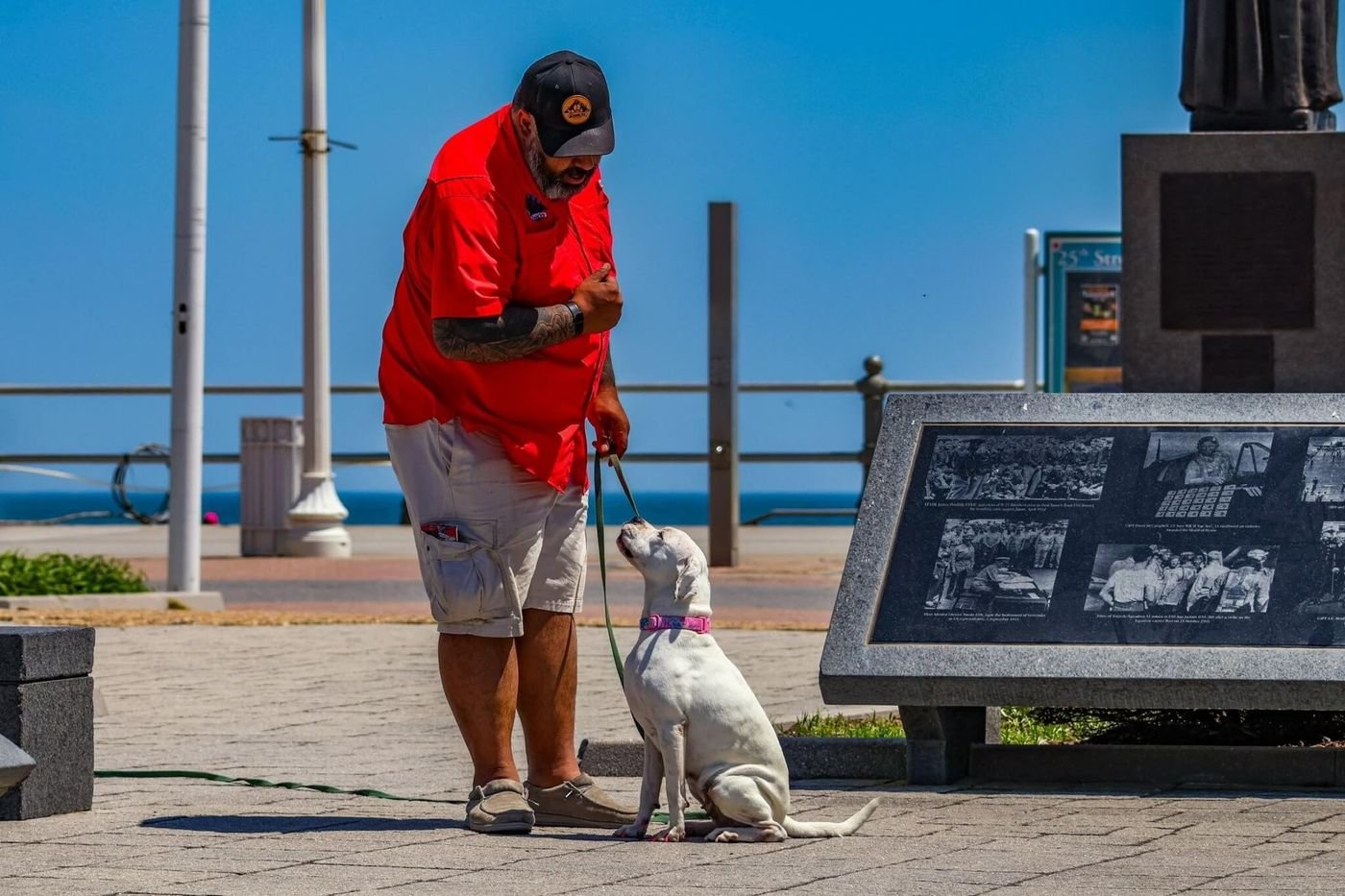
No collar or harness trains a dog by itself. Tools are just that, tools, and dogs still need training to walk well on leash. The right gear simply makes that training easier and safer while the dog learns.
Front-attachment harnesses clip the leash at the chest, which the veterinary behavior service at UC Davis lists as decreasing pulling, with the honest note that some dogs still pull in one (UC Davis School of Veterinary Medicine, Loose Leash Walking). Head collars control the head but can be mistaken for a muzzle, and most dogs need time to get used to one. A flat collar is fine for a dog that already walks well but does nothing to stop a committed puller on its own. Any tool that puts pressure on the neck, including slip leads and training collars, can injure a dog when used with force or without instruction, which is why we wrote a whole post on whether slip leads are bad for dogs.
Whatever you walk your dog on, the baseline applies: always use a leash and collar, with proper identification including a microchip. A polite leash walker is also welcome in a lot more places around Virginia Beach, from the boardwalk to the trails in our guide to stress-free walks at First Landing State Park.
What a Balanced Trainer Does Differently
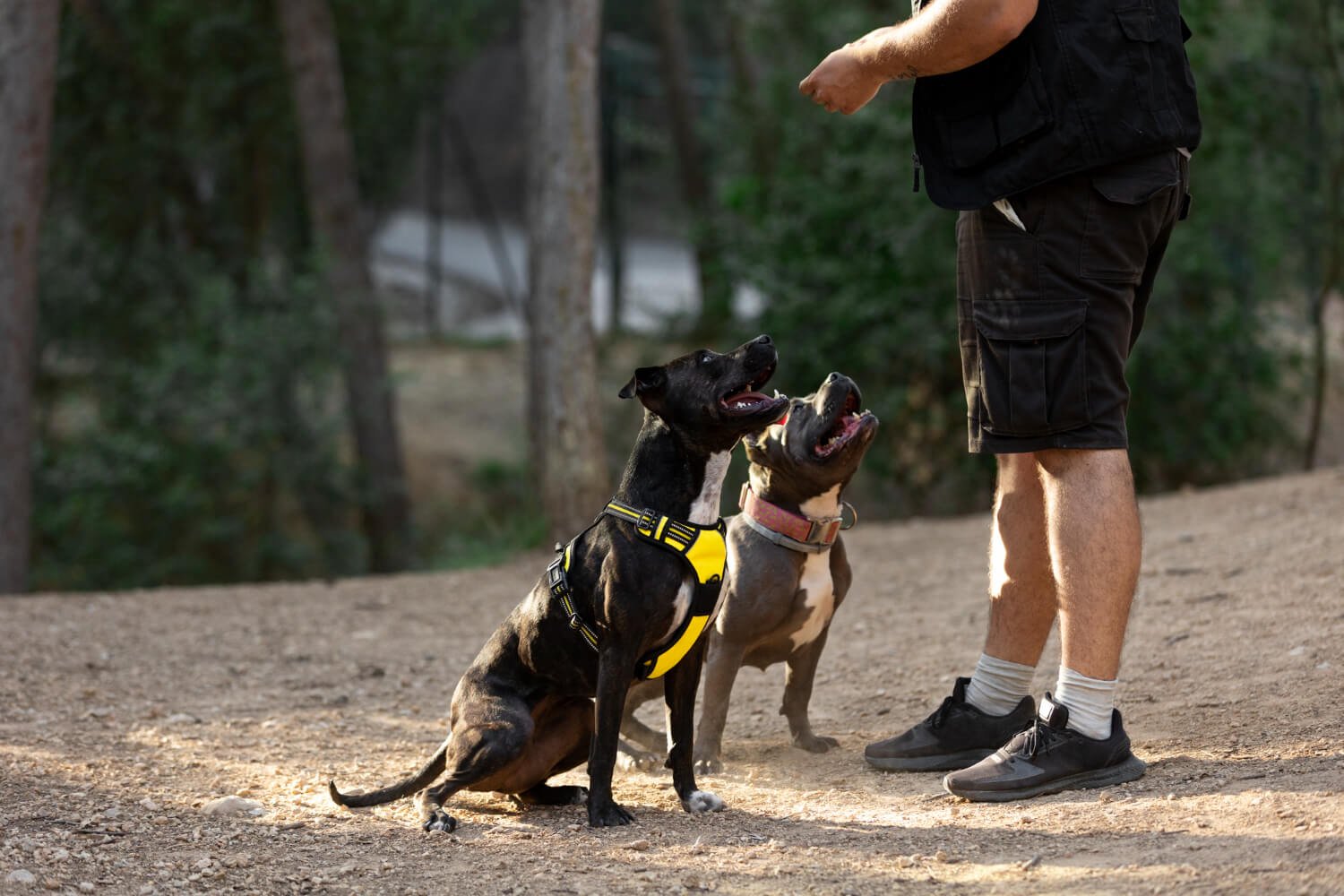
A six-month-old Lab pulling out of excitement and a four-year-old Shepherd pulling toward other dogs are not the same case, even though both owners call us saying the same thing: my dog pulls. The Lab is pulling to get somewhere, so the fix is the rule above, taught with better timing and held on every walk. The Shepherd is pulling at a trigger, which is closer to leash reactivity than plain pulling and needs a different plan. That is why every dog we take on in Virginia Beach gets evaluated first, before anyone picks a tool or a method.
If you have tried the steps above for weeks and your walks still look like water skiing, the problem is usually timing, consistency, or a habit stronger than the reward on offer. This is where private lessons earn their keep, and where a balanced approach matters.
Balanced training means the dog learns from both sides of the equation. Positive reinforcement adds something the dog wants when it does the right thing, such as praise or food for walking at your side. Negative reinforcement removes something the dog does not want, such as leash pressure easing the instant the dog stops pulling. We use a combination of the two. Pressure comes on gently when the dog forges ahead and comes off the moment the dog yields, so the dog learns that it controls the pressure.
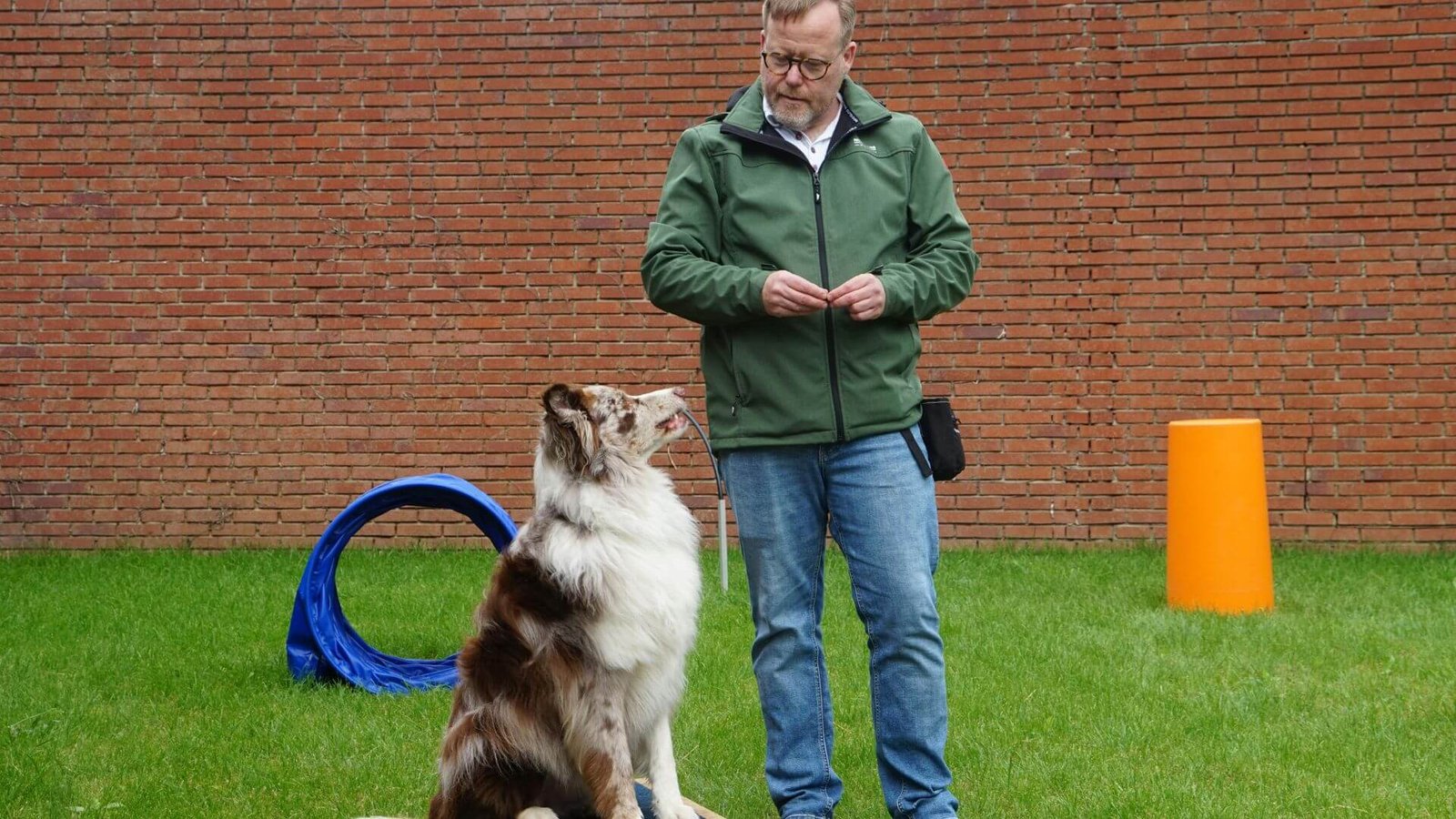
What a balanced trainer at Coastal K9 does differently from a video tutorial comes down to four things. We evaluate the dog first. We teach the position with reward and clear leash communication before asking for any accountability. Once the dog genuinely understands, we hold it to the standard calmly and consistently instead of negotiating every block. And we coach the human, because the dog goes home with you.
Do We Use E-Collars to Stop Leash Pulling?
No. We do not put an e-collar on a dog to stop pulling, and an e-collar is not how a dog learns to walk on a loose leash. Loose leash walking is taught with reward and clear leash communication, the way we described above. As we explain in our post on how a former K9 handler uses e-collars, an e-collar reinforces a command the dog already knows, is introduced later at the lowest level the dog can feel, and only when it fits that dog. Many leash pulling cases never need one.
Leash Reactivity Is a Different Problem
Some dogs walk fine until a dog, a jogger or a skateboard appears, then explode toward it, barking and lunging. That is leash reactivity, and the steps above will not fix it on their own, because the dog is not pulling to get somewhere. It is reacting to something, often out of frustration or fear.
Dogs showing fear, anxiety or aggression need to be assessed separately before leash training, and a veterinarian or veterinary behaviorist may be part of that. We will tell you if your dog’s case needs a veterinarian’s input first. For most reactive dogs we see, leash reactivity training happens in private lessons: start at a distance where the dog can still think, build a reliable alternative to lunging, then close the gap. It takes longer than fixing plain pulling, and how long depends entirely on the dog. We explain what is happening and how we work through it in our guide to why dogs bark and lunge at other dogs on walks. If your walks involve lunging, barking or growling at other dogs, start with our behavior-focused private lessons rather than a group setting.
For busy households, our day training program includes leash manners and pulling control, so the dog gets daily repetition with a trainer and you practice the same skills each evening.
Common Questions About Leash Pulling
How long does it take to stop leash pulling?
Can an adult dog still learn loose leash walking?
Should I use a harness or a collar to stop pulling?
Is leash pulling the same as leash reactivity?
Do you use e-collars to stop leash pulling?
Tired of Being Dragged Down the Street?
Loose leash walking is one of the first things we fix in private lessons. Tell us about your dog, and we will tell you honestly what it will take, with training tailored to your dog, not a one-size-fits-all program.