
A tap, not a shock
E-Collar and Remote Collar Training in Virginia Beach, VA
Worried an e-collar will scare your dog, or tried one and watched it go wrong? Our e-collar training in Virginia Beach uses the lowest level your dog can feel to reinforce commands your dog already knows on a leash. Josh Avila learned this method as a Virginia Beach Sheriff’s Department K9 handler, and he teaches you to use the remote with the same timing. We work with dogs from Chesapeake, Kempsville and all of Hampton Roads. Call and ask whether a remote collar fits your dog.

Collar on, tail up
Mini Educator
Authorized dealer
Garmin
Sport Pro authorized dealer
Ex-K9 handler
Virginia Beach Sheriff's Dept
Clear Communication You Can See
Stills from Coastal K9’s training videos showing real dogs and real handling with Josh.
Curious how e-collar training works?
Ask Josh how it fits your dog and your goals.

What it really is
What Remote Collar Training Means at Coastal K9 Academy
Remote collar training is a way to talk to your dog at a distance a leash cannot reach. The collar gives a light signal your dog can feel, a lot like a tap on the shoulder, paired with a command your dog already understands. It does not replace obedience work. It backs up what your dog has learned when you are far away or things get busy.
The unit matters too. A cheap collar can fire late or at random strengths, which confuses a dog. Coastal K9 is an authorized dealer for Ecollar Technology’s Mini Educator and the Garmin Sport Pro, and we help you pick and fit the right one.
Commands are learned on a regular leash first
We start at the lowest level your dog can feel
Mini Educator and Garmin Sport Pro units on hand
You learn the remote, timing and levels yourself
Step by step
How We Introduce the Collar: Mini Educator Training From Day One
Mini Educator training never starts with the collar on full. Your dog first proves the command on a plain leash. Then we fit the collar, find the faintest level your dog notices, and pair it with a cue your dog already knows. From there, distance and distractions grow a little at a time, never all at once.
If your dog yelps, jumps or looks worried, the level is too high or the dog is not ready yet, and we adjust. This is ongoing training that needs regular practice, so we send you home with a routine you can keep up.
Lowest level
The faintest signal that works
Step 1
Leash skills come first
Your dog has to answer the command reliably on a regular leash before the collar is involved.
Step 2
Find the working level
We search for the faintest level your dog can just barely feel, never one that startles.
Step 3
Pair it with known cues
The signal backs up a command your dog already understands. It never teaches a new one.
Step 4
Add distance and upkeep
Distance and distraction rise step by step, and you keep reinforcing the work over time.
Myths vs how it works
Is an E-Collar a Shock Collar? Myths and Honest Answers
Most fear around e-collars comes from seeing them used badly: a dog corrected at a level that makes it yelp, for something it did half a minute ago. That fear is fair. A tool used without timing or a plan can damage your dog’s trust. The answer is not to avoid the tool. It is to use it the right way.
Used correctly, a properly trained dog wearing an e-collar is calm and responsive, not anxious. Here is how the common myths stack up against the way we actually train dogs at our Horse Pasture Road facility.
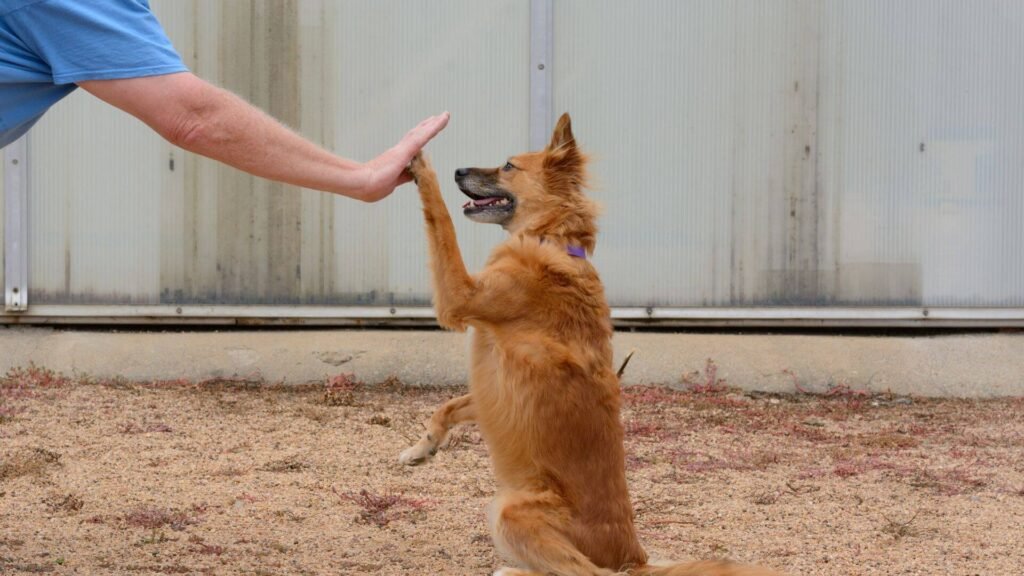
Calm, focused, listening
Myth: it works by pain. We use a level your dog can barely feel.
Myth: it teaches commands. It backs up cues taught on a leash.
Myth: any collar works. Cheap units fire late or at random strengths.
Myth: it is a quick fix. It takes steady practice and upkeep.
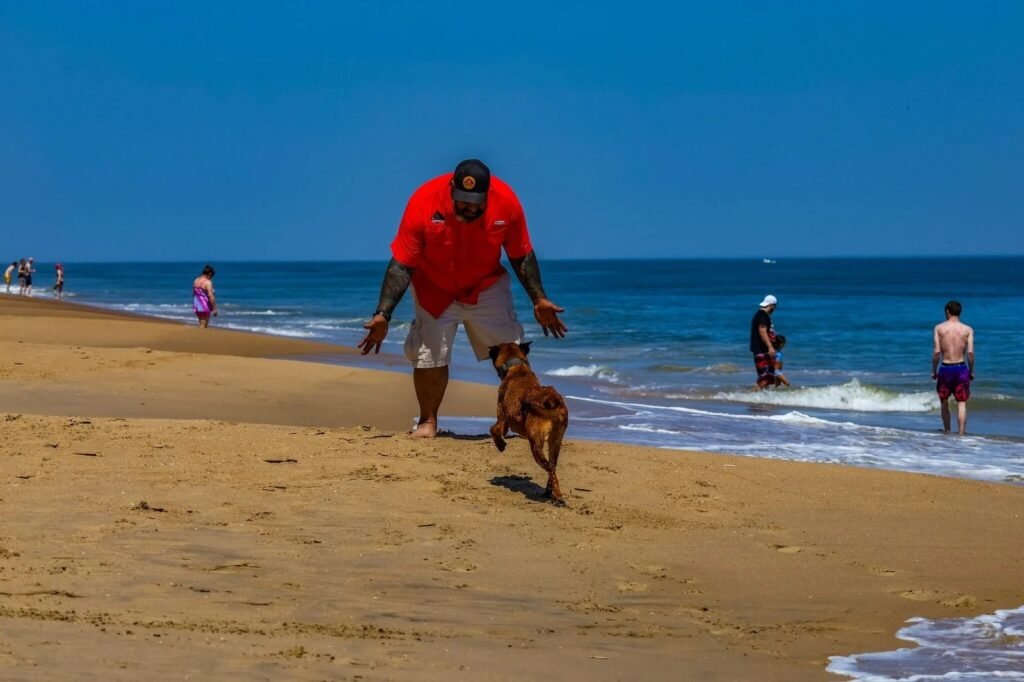
Josh Avila, founder
Your e-collar dog trainer
An E-Collar Dog Trainer With Real K9 Experience
Josh Avila handled working K9s for the Virginia Beach Sheriff’s Department, where dogs had to get commands right in real situations and not only in a quiet yard. He founded Coastal K9 Academy and still trains with the same method today. Balanced training, honest feedback and timing are the core of how he uses a remote collar.
He coaches you alongside your dog, so you leave knowing how to use the remote at home. Plans fit the dog in front of him. As we like to say, clear expectations and honest training.
Years handling working K9s
Authorized Mini Educator and Garmin dealer
Licensed, bonded and insured
Discount for military and first responders
the goal
Off-Leash Results: What a Finished Dog Can Do
Most owners come to us for one outcome: a dog they can trust at a distance. Here is what that looks like once the work is done and kept up. See our off-leash dog training page for the full plan.
Recall that holds
Your dog comes when called the first time, even when another dog, a bird or food is nearby.
Calm at a distance
A down or place that holds while you walk away, so a beach day or a visit to a friend’s yard stays relaxed.
Where you can use it
Off-leash time only belongs where the law allows it, like Virginia Beach dog parks and, in the off-season, the beach. Leash rules still apply on sidewalks, streets and in city parks.
Kept up over time
Reliability is maintained, not finished. You keep reinforcing the work, and a refresher lesson helps if something slips.
honest answers
Is Your Dog a Fit for E-Collar Training?
A remote collar is not for every dog or every stage. Plenty of plans never need one. Here is how we decide.
A good fit
Dogs that already know their commands on a leash and need reliability at a distance or around distractions, like recall at the beach or a calm place at home.
Not yet
Dogs still learning the basics. The collar never teaches a new command, so leash work comes first, whatever your dog’s age.
Something else first
Some fearful or reactive dogs need distance and confidence work before a collar is considered, and some never need one. Josh decides case by case.
When we stop
If a dog yelps, jumps or looks worried, the level is too high or the dog is not ready. We stop, lower it, or go back a step.
programs and equipment
Which Programs Include Remote Collar Work
Remote collar work can be part of the programs below when it fits your dog. Every plan is built around your dog, so pricing depends on the program; call (757) 831-3625 for options. Military and public service households get a discount, and All Pet financing is available.
Board and train
Two to four weeks of daily practice at our facility, including collar conditioning when it is part of the plan, followed by a handoff lesson. Board and train details.
Private lessons
One-on-one sessions where you learn the remote with Josh beside you, at our facility or in your home. Private lesson details.
Day training
Daily practice with a same-day pickup, with coaching so you can keep the work going at home. Day training details.
Mini Educator and Garmin Sport Pro
Coastal K9 Academy is an authorized dealer for both. If you buy a unit through us, Josh fits it to your dog and teaches you how to set the levels and use the remote. Ask which models we have on hand.
your turn
The Owner Handoff: Learning the Remote
A collar only works if the person holding the remote knows how to use it. Every e-collar plan ends with you in charge.
Finding your dog's working level
Josh shows you how to find the faintest level your dog notices, and how that level can change with excitement or distance.
Timing and cues
You practice pairing the signal with commands your dog already knows, so the timing is right when it matters.
Fit and daily care
How snug the collar should be, where it sits, how to check the skin, and how to keep the unit charged and clean.
Questions we hear
E-Collar Training FAQs
Thinking about a remote collar for your dog? Start with these answers, then call us with anything else.
Have a collar question we didn't cover?
Ask about fitting, stim levels or using a collar you already own. Josh will give you a straight answer.
- Mon to Sat, 8 AM to 5 PM
- Mini Educator and Garmin dealer
- Collar fitting and setup lesson
Is e-collar training safe?
When it is done right, yes. We use the lowest level your dog can feel, similar to a tap on the shoulder, and only to reinforce a command your dog already knows. If a dog yelps or acts scared, the collar is being used wrong. We watch your dog closely and adjust right away.
Does an e-collar hurt my dog?
Used correctly, no. The goal is a level your dog notices, not one that causes pain or fear. A dog that is trained well stays calm and responsive while wearing the collar. Pain and panic are signs of poor timing or a level set far too high.
Does my dog need obedience training before e-collar work?
Yes. The collar backs up commands your dog has already learned on a regular leash. Trying to teach a brand new command with it is one of the most common mistakes owners make on their own, and it confuses the dog.
Why do you use the Mini Educator and Garmin Sport Pro?
Consistency. A professional unit delivers the same level every time and responds instantly, so your dog can tie the signal to what it just did. Coastal K9 Academy is an authorized dealer for both, and we teach you how to set and use yours.
What age can my dog start remote collar training?
There is no set age. What matters more is whether your dog reliably knows the command on a leash. We look at each dog on its own and build the plan from there, rather than starting everyone on the same schedule.
How much does e-collar training cost?
Every plan is built around your dog, so the price depends on the program and how much work your dog needs. Call (757) 831-3625 and Josh will walk you through the options, including whether you need a collar. Military and public service households get a discount, and All Pet financing is available.
How long until my dog can be off leash?
It depends on your dog, how solid the leash skills are, and how often you practice. Distance and distractions grow step by step, and Josh will give you a realistic estimate once he sees your dog.
Is e-collar training OK for small dogs?
Size alone does not rule it out. The collar fit and level are set for your dog, and the same rule applies: commands are learned on a leash first. Josh will tell you honestly if a collar makes sense for your dog.
Can reactive or aggressive dogs use an e-collar?
Sometimes, but not as a first step. Reactive and aggressive dogs start with an assessment and distance work, and a collar is considered only when it fits the plan. See our reactive and aggressive dog training pages.
How many hours a day should the collar be worn?
Only while training and on outings, not around the clock. We show you how to check the fit, move the contact points, and give the skin a break.
Can my dog wear it at the beach?
The units we sell are built for outdoor and water use, so beach recall work is fine. We show you how to rinse and charge the unit after salt water. Remember that summer rules keep dogs off the Resort Area sand.
Will you train with a collar I already bought?
Bring it in and Josh will take a look. If it fires late or at uneven strengths, he may recommend a professional unit, since inconsistent signals confuse dogs.
Curious about e-collars?
Ask Josh About E-Collar Training
Call us, tell us what your dog already knows, and we will be honest about whether a remote collar fits. Remote collar clients come to us from Virginia Beach, Chesapeake, Kempsville, and across Hampton Roads.